×
![]()
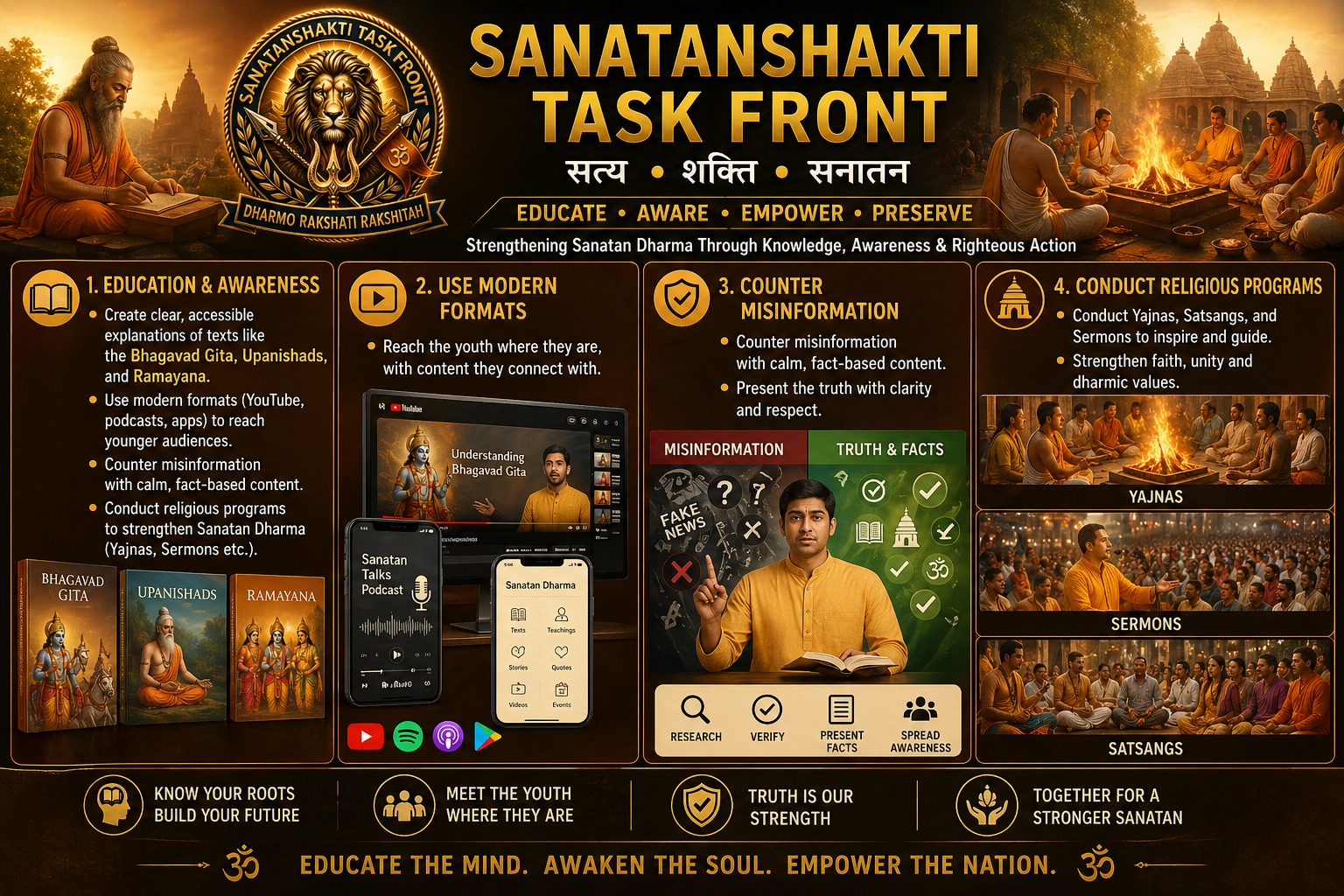
01 Education & Awareness
- Create clear, accessible explanations of texts like Bhagavad Gita, Upanishads & Ramayana.
- Use modern formats (YouTube, podcasts, apps) to reach younger audiences.
- Counter misinformation with calm, fact-based content.
- Conduct religious programs like Yajnas and Sermons to strengthen Dharma.
×
![]()
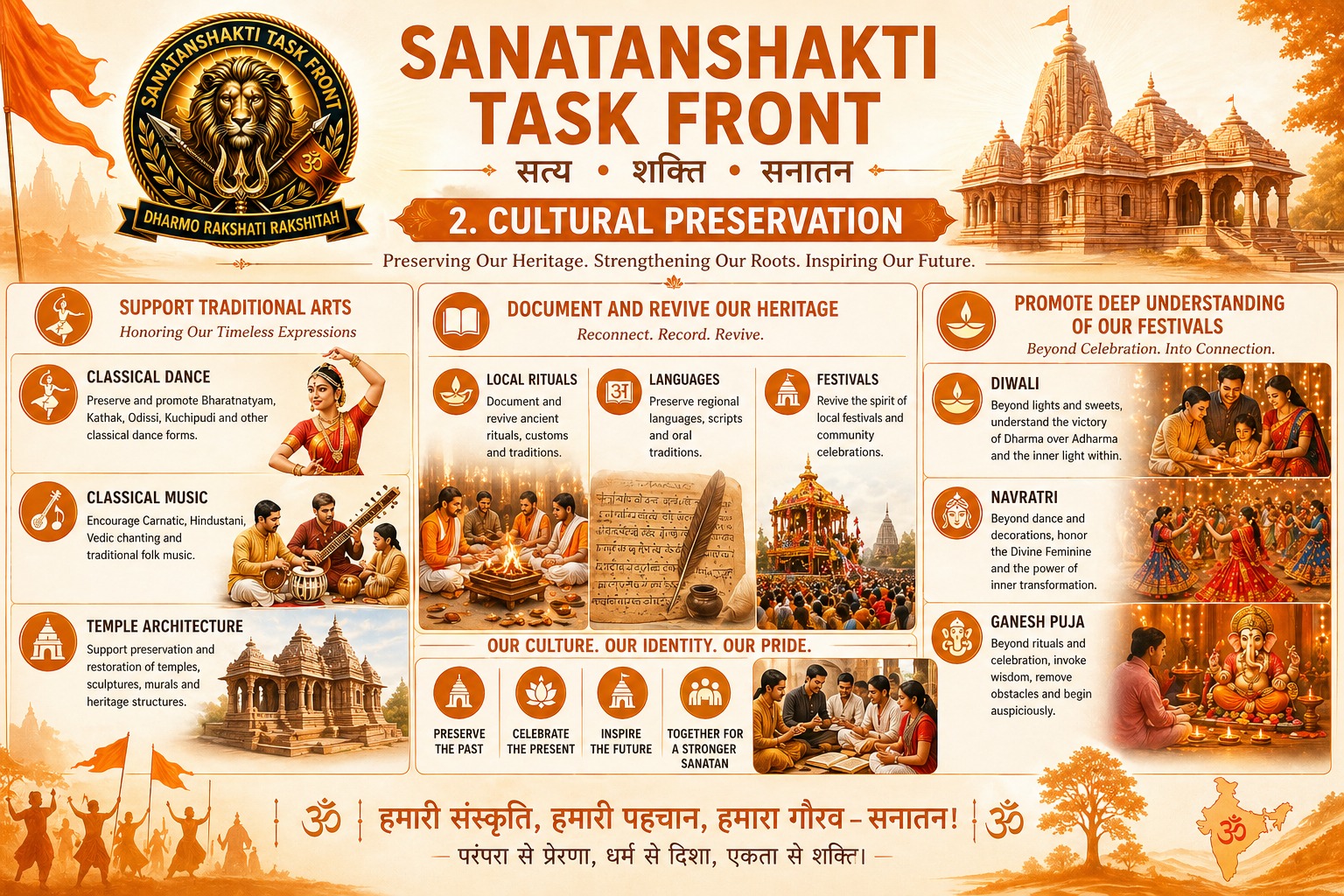
02 Cultural Preservation
- Support traditional arts like classical dance, music, and temple architecture.
- Document and revive local rituals, languages, and festivals.
- Promote deep understanding of festivals like Diwali & Navratri beyond surface celebration.
×
![]()
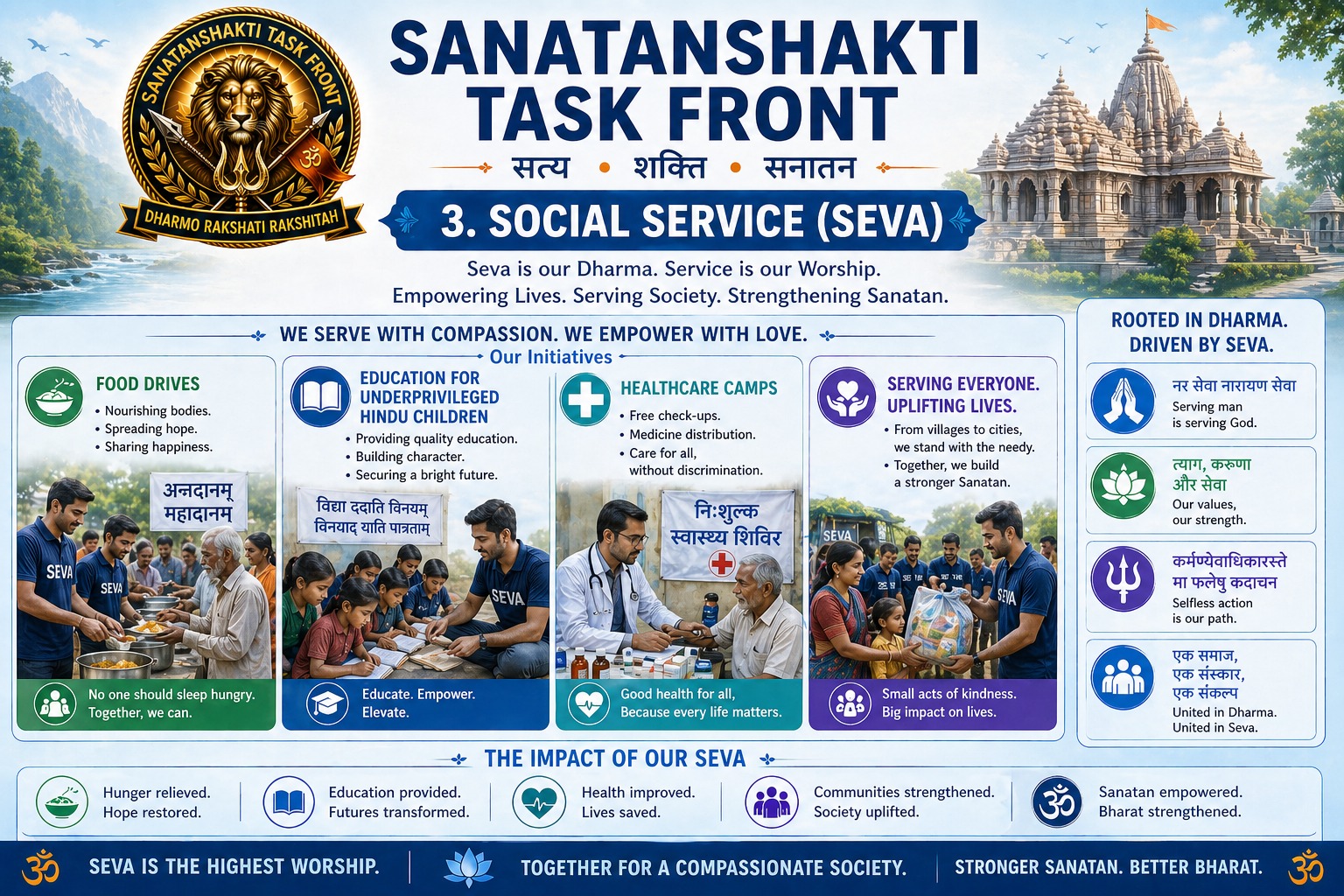
03 Social Service (Seva)
- Organize food drives and education for underprivileged Hindu children.
- Set up healthcare camps in underserved areas.
- Align with the dharmic idea of Seva (selfless service) as a central tradition.
×
![]()
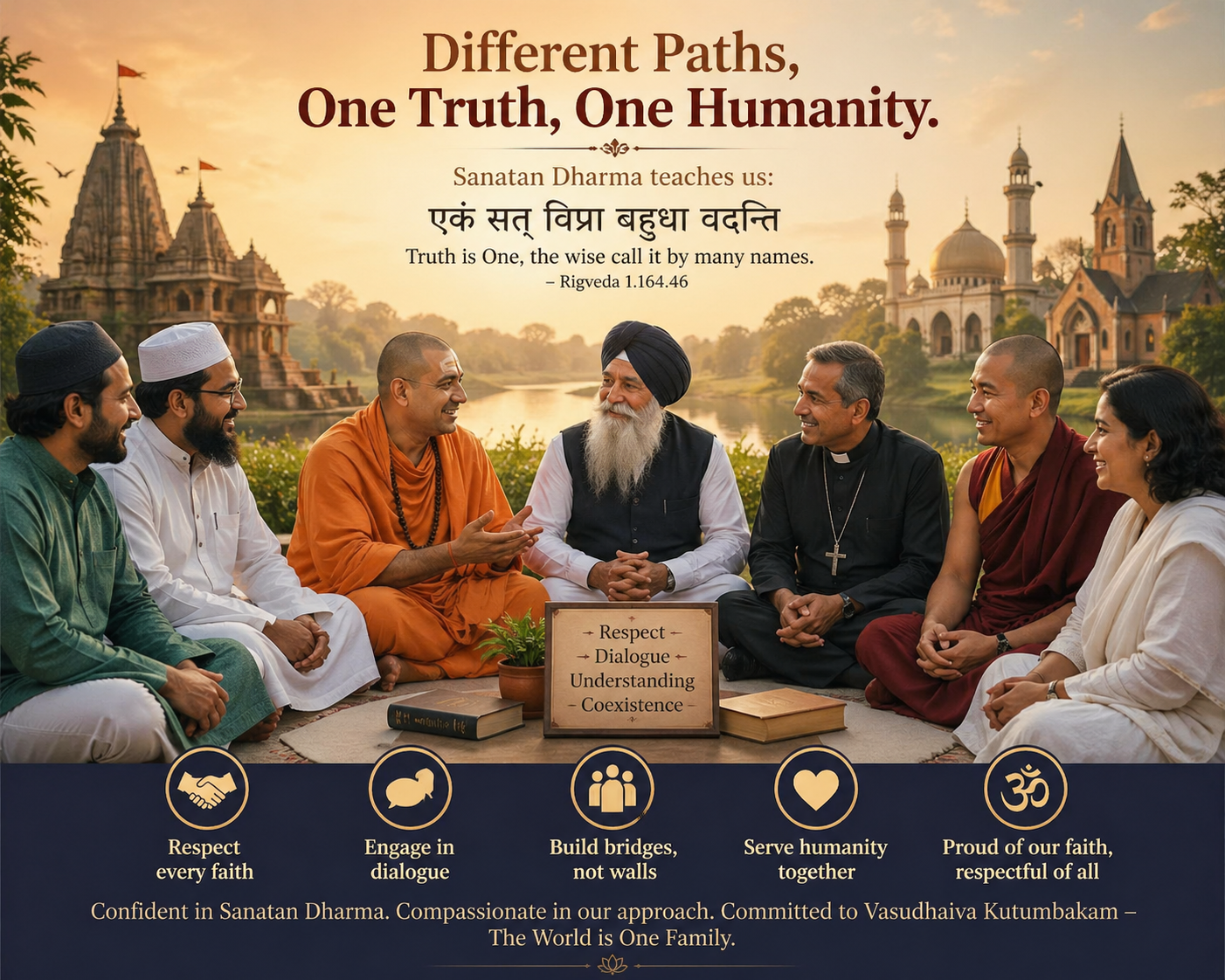
04 Interfaith & Social Harmony
- Encourage dialogue rather than conflict in complex situations.
- Represent Sanatan Dharma in a way that is confident but respectful of others.
×
![]()
05 Environmental Work
- Promote eco-conscious practices rooted in Prakriti Seva (respect for rivers & animals).
- Support river cleanups, tree plantation, and sustainable living.
×
![]()
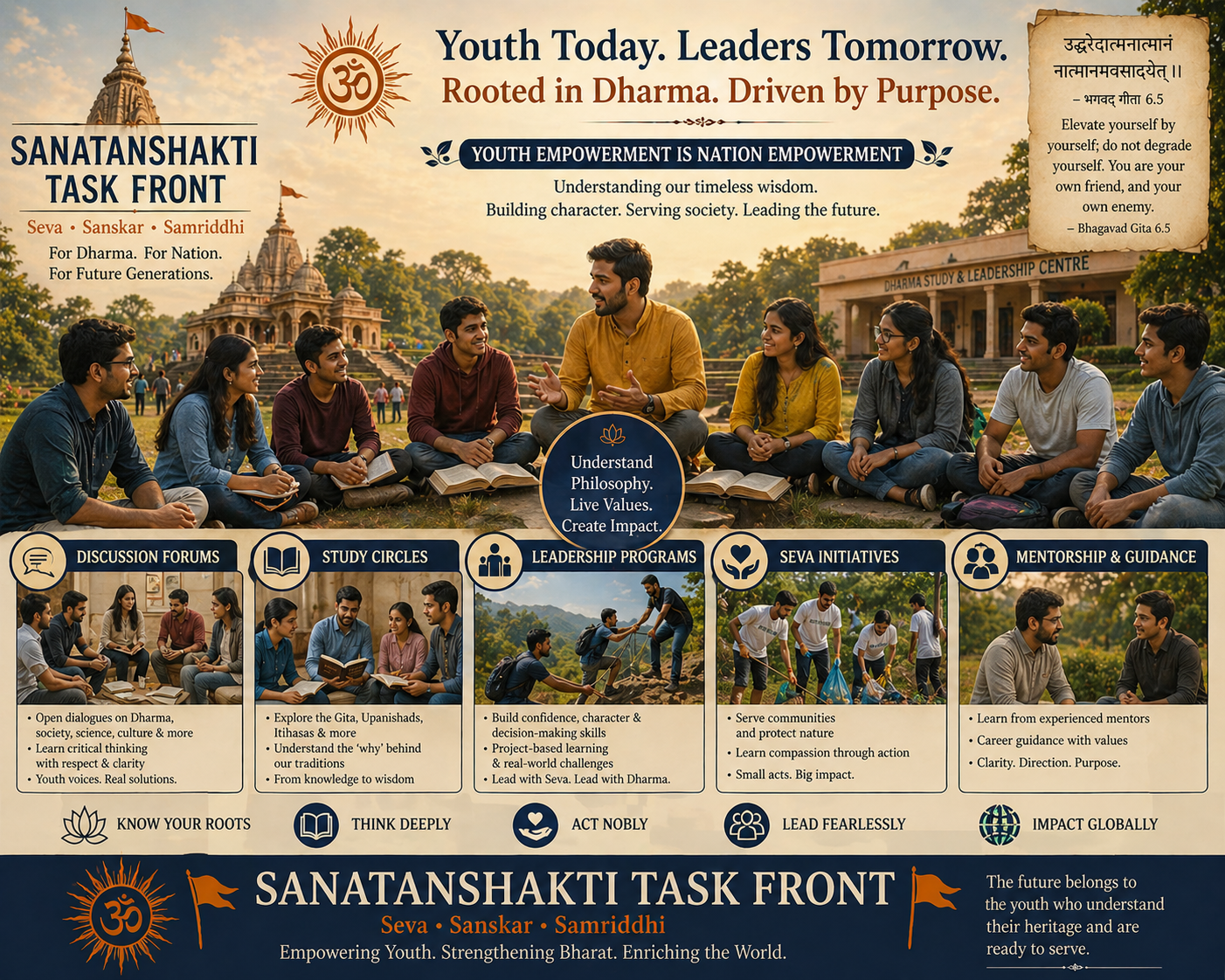
06 Youth Engagement
- Create discussion forums and leadership programs for the next generation.
- Help young people understand the deep philosophy, not just the rituals.
×
![]()
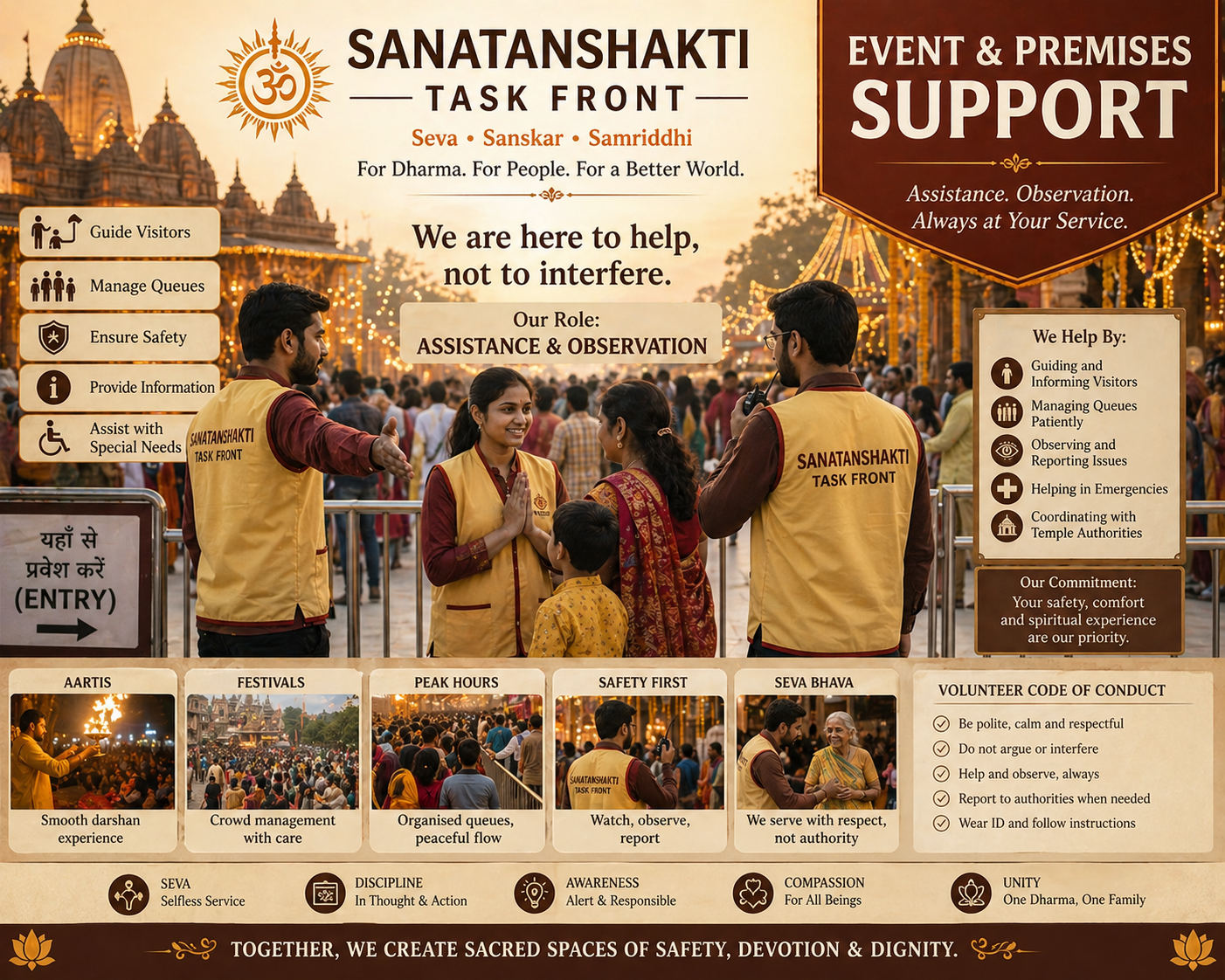
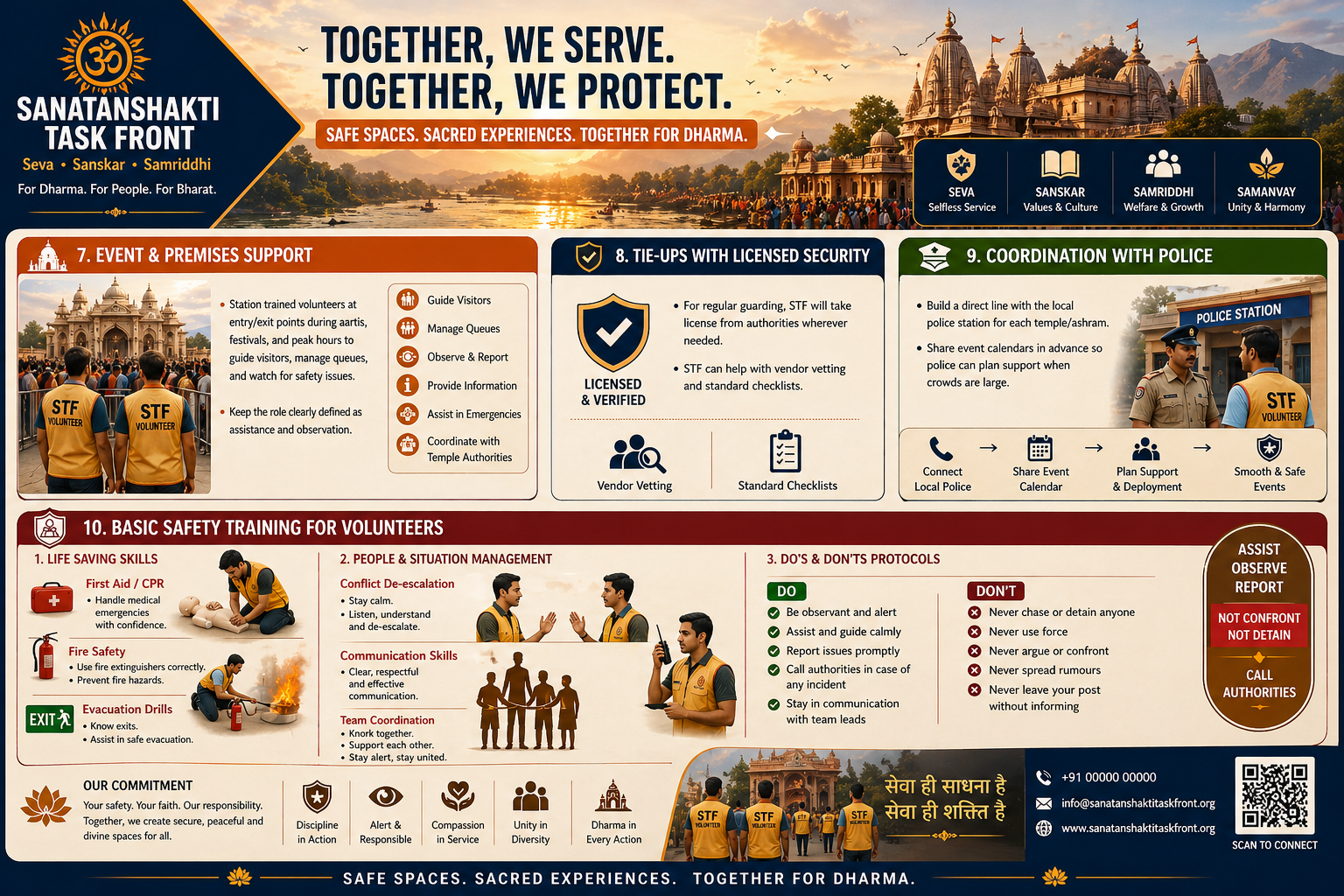
07 Event & Premises Support
- Station trained volunteers at entry/exit points during festivals and peak hours.
- Manage queues, guide visitors, and watch for safety issues.
- Maintain roles clearly defined as assistance and observation.
×
![]()
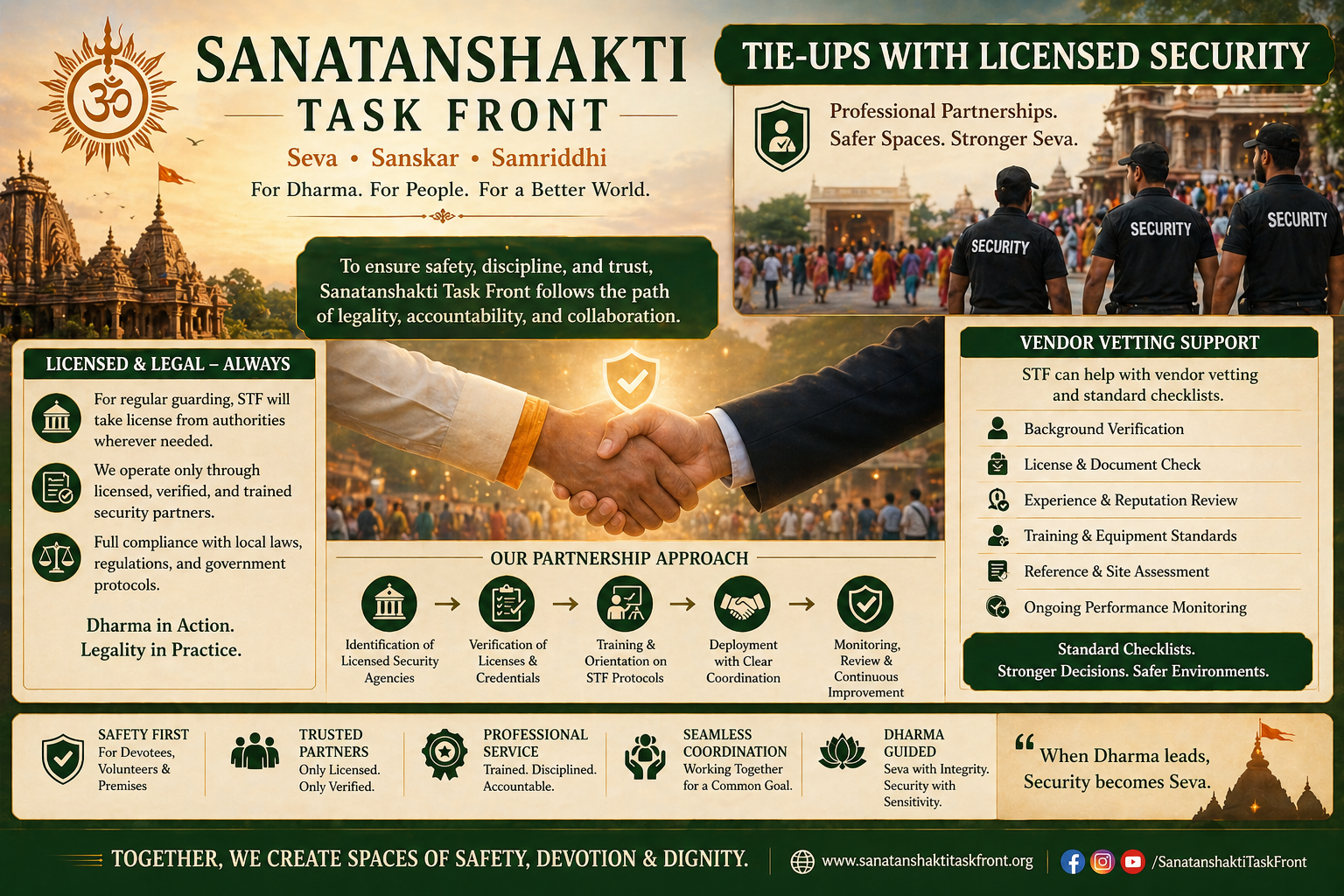
08 Tie-ups with Licensed Security
- Liaise with authorities to take licenses for regular guarding where needed.
- Help with vendor vetting and implementing standard security checklists.
×
![]()
09 Coordination with Police
- Build a direct line with local police stations for each temple/ashram.
- Share event calendars in advance so police can plan support for large crowds.
×
![]()
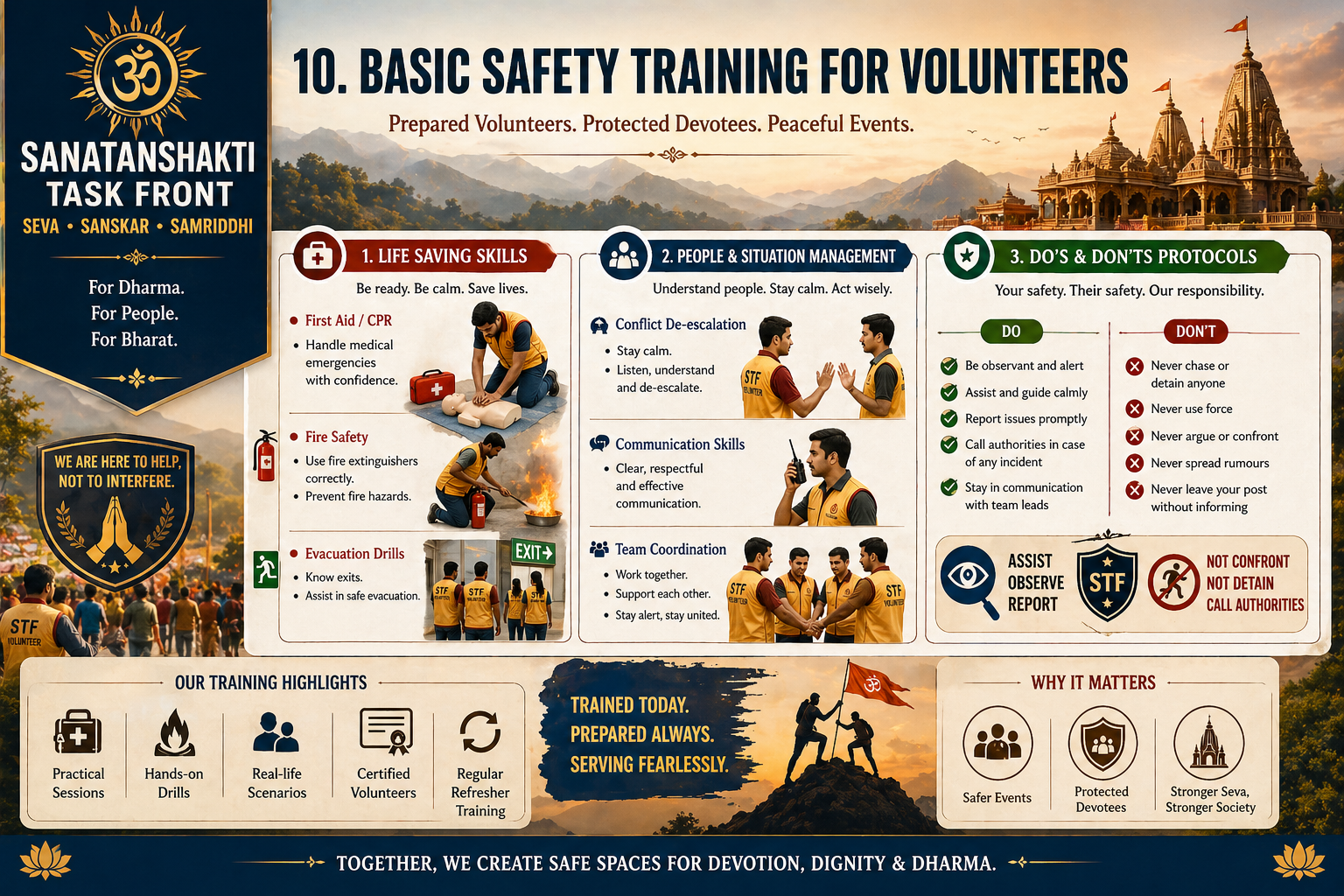
10 Basic safety training for volunteers
- First aid/CPR, fire safety, evacuation drills.
- Conflict de-escalation and communication skills.
- Clear “do & don’t” protocols (e.g., never chase or detain; call authorities).
×
![]()
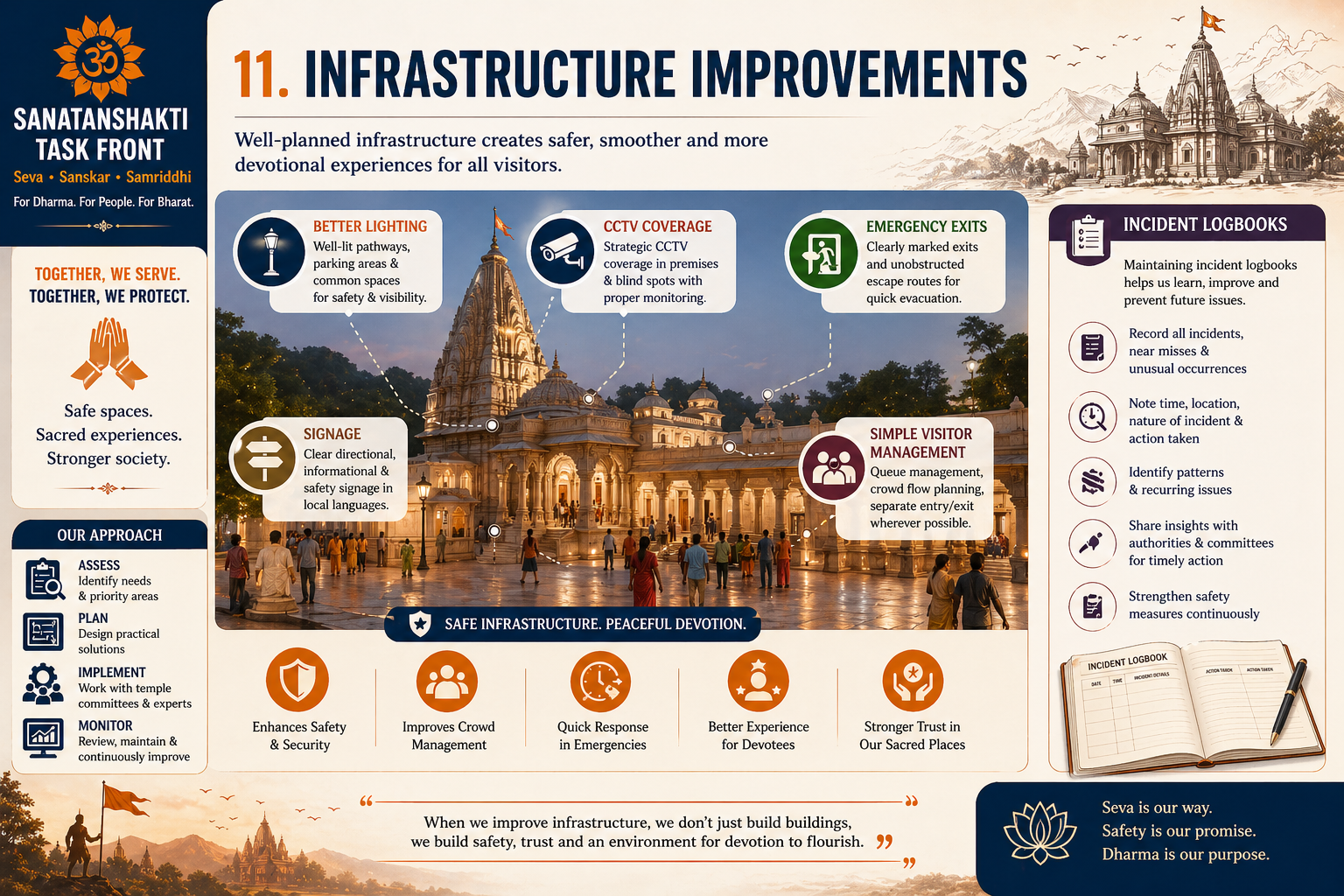
11 Infrastructure improvements
- Better lighting, CCTV coverage, emergency exits, signage, and simple visitor
management at religious places.
- Incident logbooks so patterns can be spotted and reported.
×
![]()
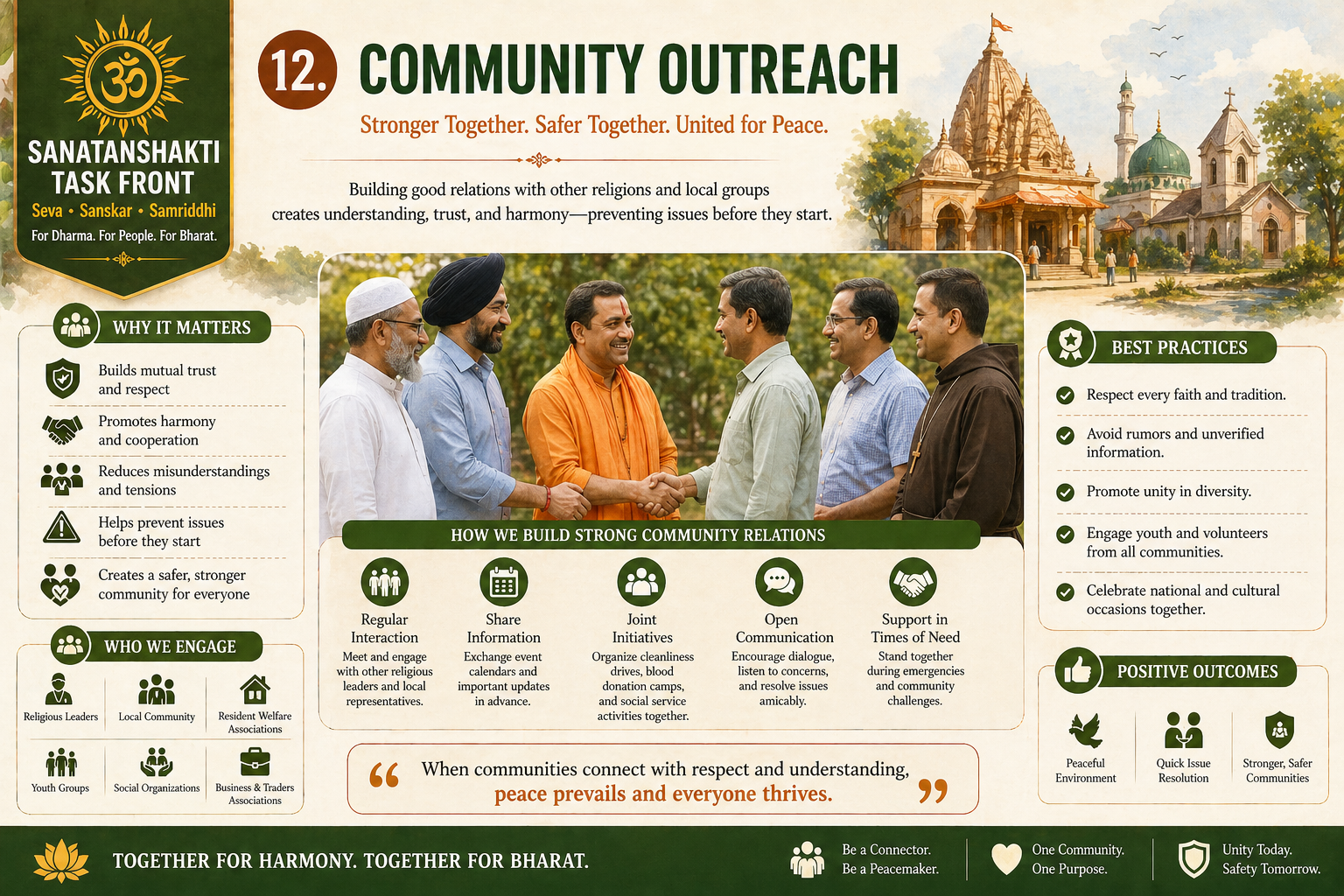
12 Community outreach
- Build good relations with other religions and local groups; this often prevents issues
before they start.
×
![]()